


The Experts said that: If you go invest in your health for 6 month, you will gain your health and wellbeing as a gift, and if you invest in your career for 6 month, you will gain a fresh begingng maybe to make from it a lot of money..etc, as you see here in this article, you will see the people of Hong Kong has high rate of using social media in the whole world, so, if you are one of them (our target in this article) and other off course, why you waste your time while you can invest in something give you a smart and bright future, let us explain what social media in Hong Kong are famous and every one of them for what? but you maybe ask why Hong Kong in particular? so, we answer you by: The Hong Kong in China, we have the first project of World Civility Index with Global Peace Let's Talk and we have a hub there, so we want to know you what behind the scenes, let's go.
Hong Kong boasts the highest social media penetration rate in the world
With 6.46 million active users, representing 86.2% of the total population, Hong Kong has one of the highest social media penetration rates globally. This rate rises to 89.1% among adults aged 18 and over, according to the report.
Understanding Hong Kong’s Demographics
Understanding Hong Kong’s demographics is essential for effective marketing strategies in this dynamic market. Hong Kong’s population is characterized by high urban density, with residents living in high-rise apartments and smaller living spaces. The city is also characterized by its age diversity, ranging from a large elderly population to a growing number of tech-savvy millennials. In terms of income levels, there is a clear wealth gap, with affluent consumers coexisting alongside those from more modest backgrounds. Education plays a crucial role, as a significant proportion of the population holds university degrees, which influences their purchasing behavior and preferences for quality products and services.
What cultural factors should be considered in Hong Kong?
Hong Kong’s unique blend of Eastern and Western cultures creates a dynamic environment for marketers, requiring a deep understanding of local traditions and values. By adopting multicultural marketing strategies, companies can bridge the gap between different consumer segments. Localizing brands and messaging becomes crucial for engaging with Hong Kong residents, where linguistic and symbolic differences are paramount. Building trust and credibility through cultural adaptation not only enhances brand image but also fosters long-term customer loyalty, a key factor in Hong Kong’s competitive market.
Using traditional marketing channels such as outdoor advertising and local print media can complement digital efforts to increase reach and boost sales conversions.
Incorporating elements of the local language, such as Cantonese, into marketing materials and advertisements can create a sense of authenticity and trustworthiness with consumers. Incorporating culturally relevant themes and symbols can also enhance brand image and increase its emotional resonance. Adopting this level of personalization demonstrates a commitment to the local market, which ultimately fosters stronger customer relationships and enhances brand loyalty.
The most popular platforms and their marketing value
The unique strengths of each social media platform, while also highlighting the challenges brands face:
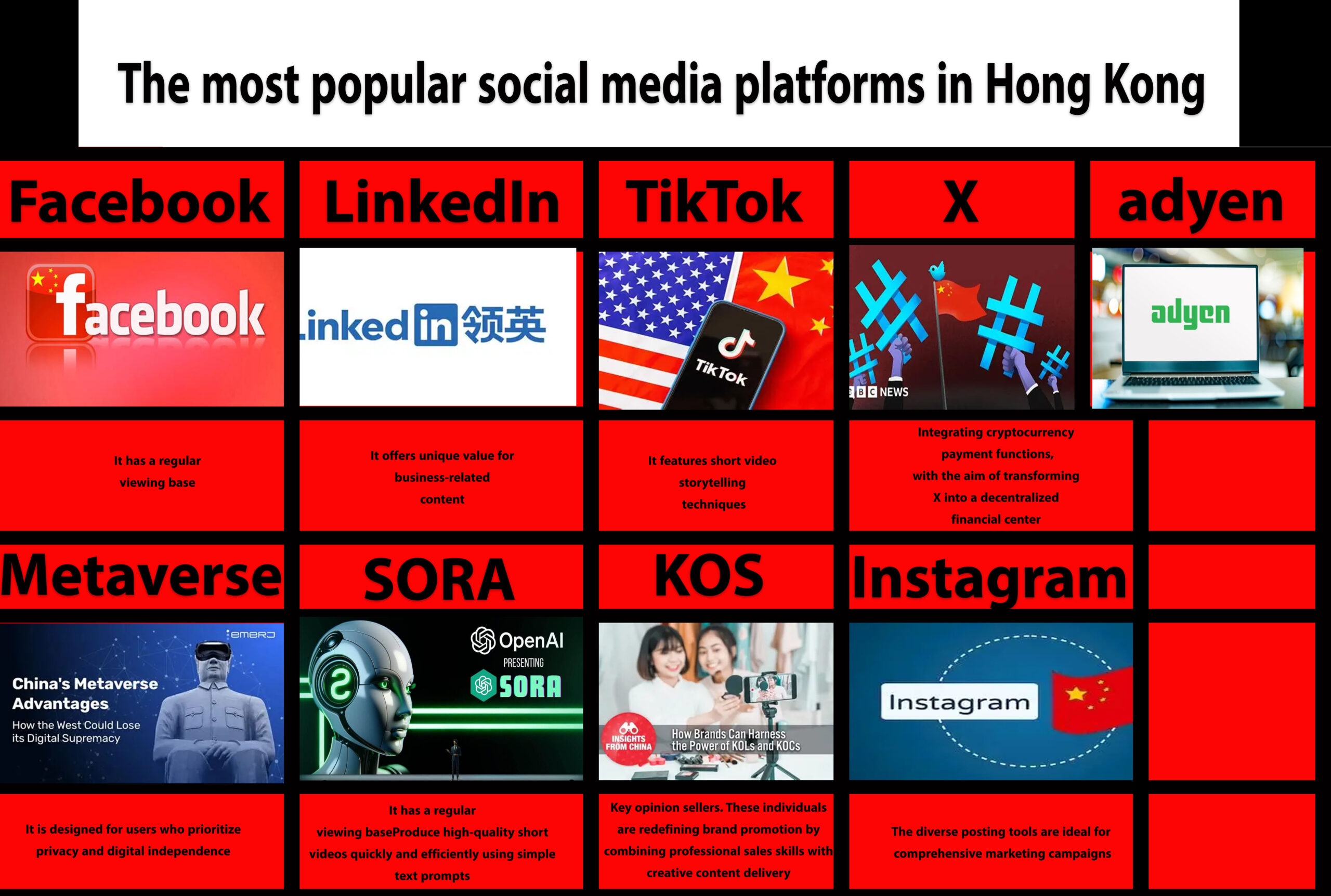
Has a consistent viewership, but its influence is gradually diminishing as audiences migrate to other platforms.
LinkedIn maintains its position as a preferred platform for professionals, offering unique value for business-related content.
Its advantages include:
LinkedIn provides untapped opportunities for professional networking and instant interaction.
Threads
(owned by Meta, the company behind Facebook and Instagram)
Despite its promising instant communication features, it has yet to establish itself in the market. Threads offer untapped opportunities for professional networking and instant interaction. Meta launched Threads in 2023 and quickly established itself as a unique player in the social media ecosystem, focusing on instant text communication. This “simple” social platform caters to a younger audience, particularly those born in the 1990s and 2000s, and has attracted brands and content creators looking to experiment with new formats. Threads is characterized by its sophisticated, forum-like nature, setting it apart from its predecessor, X (formerly Twitter).
TikTok
During Trump’s previous term, he tried to force US companies to acquire TikTok, citing concerns about data privacy and national security. In this new term, regulatory actions by the Biden administration have put TikTok in an even more precarious position. Recent reports suggest that further restrictions could escalate as early as 2025, with a complete US ban remaining a possibility. If this happens, it will cast a shadow over TikTok’s global expansion, severely disrupting its international operations and causing widespread repercussions for the social media sector. Meta and Google, both armed with their own short-video products, are poised to capitalize on TikTok’s loss of market share in the US. In Hong Kong, TikTok previously exited due to geopolitical pressures, leaving Douyin to fill the void. Nevertheless, the short-video revolution spearheaded by TikTok has left a lasting mark on the social media landscape. Platforms like Instagram (Reels) and YouTube (Shorts) continue to ride the wave, with short-form video storytelling techniques dominating global content trends.
X (formerly Twitter)
Under Elon Musk’s leadership, X (formerly Twitter) has taken a completely different path. Musk has been steering the platform toward integrating cryptocurrency payment functionality, aiming to transform X into a decentralized financial hub. The Bitcoin boom has solidified X as the preferred social media platform for the global crypto community. For content creators and brands in Hong Kong, these developments offer unique opportunities to connect with global audiences and leverage cross-border marketing. The evolving cryptocurrency landscape also provides fertile ground for innovation. However, Hong Kong’s regulatory stance on cryptocurrencies remains ambiguous, meaning companies must carefully balance creativity with compliance.
Addin Payment Platform
According to a report by the payment platform Addin, 75% of Hong Kong consumers shop via social media platforms, making an average of seven transactions per month, with a total value of HK$4,154.75 per transaction. This highlights how seamless integration between content and commerce has become a crucial factor influencing consumer decisions. Instagram
Instagram remains a dominant force thanks to its diverse content formats and seamless mobile experience.
Its advantages include
The platform’s varied publishing tools make it ideal for comprehensive marketing campaigns.
Xiaohongshu (The Little Red Book: A Travel Guide)
While known for its strengths in shopping and travel content, many users described it as “not getting any attention.” This suggests that its content strategy or platform functionality may not fully align with the expectations of Hong Kong users. Focusing on content that resonates with local Hong Kong residents would enhance its appeal, particularly among cross-border travelers. A balanced “locals love it too” strategy could boost brand perception both in Hong Kong and internationally. As the most influential social platform in China, Xiaohongshu has evolved into an essential tool for mainland tourists planning their trips. With the resurgence of independent travelers and the influx of mainland professionals working in Hong Kong, Xiaohongshu’s influence on the city’s tourism and local brands is rapidly growing. The platform has become a vital bridge, fostering cross-border connections and providing new opportunities for the region’s marketing landscape. As of April 2023, Xiaohongshu’s daily active users in Hong Kong had increased by 50%, reaching 1.13 million. Capitalizing on this momentum, the Hong Kong Tourism Board (HKTB) has integrated Xiaohongshu into its marketing strategy, promoting in-depth cultural tours and targeting travelers seeking new experiences. The platform’s vibrant, user-driven ecosystem provides tourists with authentic insights into local attractions, encouraging more personalized and interactive travel experiences. However, while Xiaohongshu has significantly boosted the visibility of Hong Kong destinations and businesses, retailers have expressed concerns about the limited economic impact of the “check-in” culture. Tourists often visit attractions simply to take photos and post on social media without contributing significantly to local spending. To unlock the full potential of this tourism movement, the HKTB must focus on shifting tourists’ focus from “coming to check in” to “staying for meaningful experiences.” By enhancing the depth and value of the experiences offered, the city can transform transient tourism into sustainable economic benefits. Furthering its growth trajectory, Xiaohongshu plans to establish a dedicated office in Hong Kong in the last quarter of 2024, assembling a 20-member team to bolster its operations in the North Asian market. This move signals the platform’s commitment to strengthening its presence in the region, paving the way for more localized content and partnerships tailored specifically to the Hong Kong market.
The Chinese communities in Southeast Asia represent another promising growth area for Xiaohongshu
In Malaysia, for example, the platform boasts over 2.5 million users, making it the third-largest market after mainland China and Taiwan. As a preferred destination for Southeast Asian Chinese travelers, Hong Kong stands to benefit from leveraging Xiaohongshu to attract these high-spending tourists. By telling compelling stories, showcasing local culture, innovative products, and unique business narratives, Hong Kong can naturally expand its reach to a broader international audience.
known as Weixin in China, is an all-in-one app that integrates various features, making it a “super app.” Launched in 2011, it has become one of the largest standalone mobile applications globally, with a user base that spans over 200 countries and regions. The app allows users to communicate through text, voice, and video messages, share photos and videos, and engage in social networking.
A collaboration between Hong Kong-based startup Awethentic Studio and TUMI
Augmented reality experience to create visual clips for Cartier. Globally, the proliferation of smart glasses is accelerating the adoption of AR and AI technologies in e-commerce. Devices like Meta’s Orion and Apple’s second-generation Vision Pro are pushing AR applications beyond gaming to include retail, education, and healthcare, unlocking enormous market potential.
SORA Smart Tool
OpenAI’s video creation tool ushers in a new era where high-quality short videos can be produced quickly and efficiently using simple text prompts. This technology gives marketers a powerful creative boost, offering new ways to engage audiences.
Feedverse (Unified Universe)
A Decentralized Social Media Interface
The concept of Feedverse (Unified Universe) may seem strange and limited to many Hong Kong users. However, marketers shouldn’t underestimate its potential to reshape brand strategies. Feedverse refers to an interconnected ecosystem of decentralized social media platforms, such as Mastodon and Pixelved, operating across distributed servers. This unique structure gives users greater control over their data while providing enhanced privacy protection—qualities that appeal to audiences increasingly wary of centralized platforms. Feedverse’s core appeal lies in its independence from corporate control. Unlike traditional social media platforms, it is free from intrusive advertising and algorithmic manipulation. This offers a rare opportunity for brands to engage with audiences in a more direct, authentic, and transparent way. For users who prioritize privacy and digital autonomy, Feedverse provides an attractive alternative, and for brands, it offers new ways to build meaningful relationships.
The New KOS Marketing Model
Following the rise of Key Opinion Leaders (KOLs) and Key Opinion Consumers (KOCs), a new class of influencers is gaining momentum: Key Opinion Sellers. These individuals are redefining brand promotion by combining professional sales skills with creative content delivery. Key Opinion Sellers are social media influencers with deep product knowledge and the ability to transform their expertise into engaging social content. They seamlessly integrate storytelling with strategic selling, directly influencing consumers’ purchasing decisions. Their dual role as educators and sales professionals allows them to deliver credible, high-impact marketing messages.
The emergence of Key Opinion Sellers is a response to evolving marketing dynamics. While Key Opinion Leaders dominated the early stages of influencer marketing, their high costs and declining returns have led brands to explore more cost-effective options like Key Opinion Sellers. However, while key opinion sellers are authentic and communicative, they often lack the professional edge needed to consistently meet brand messaging needs. KOS bridges this gap by combining the professionalism of KOL with the authenticity of KOC, offering a powerful alternative for brands seeking deeper consumer engagement. KOS excels at building focused, high-value relationships with their audiences. By providing tailored, professional advice specific to product characteristics, they foster trust and credibility, both crucial for increasing conversions. Furthermore, KOS can leverage their influence to drive both online purchases and in-store visits, making them effective in multi-channel marketing strategies. Integrating online promotion with traditional experiences leads to more enriching and impactful customer journeys, significantly improving sales conversion rates. A notable trend is the in-house development of KOS. Brands are increasingly training their staff to act as social media representatives, combining their professional expertise with content creation skills. Internal KOS(s) can interact directly with consumers, respond to their inquiries immediately, and provide tailored services that enhance their satisfaction and loyalty. This approach not only strengthens the brand’s human touch but also reduces reliance on external influencers, lowering marketing costs without compromising quality. As digital transformation accelerates, the KOS model is expected to become a cornerstone of marketing strategies. By integrating KOS into their promotional frameworks, brands can cultivate deeper relationships with consumers through professional, personalized, and authentic content. This not only reduces marketing costs but also enhances market competitiveness, allowing brands to stand out in an increasingly crowded digital environment. It’s a strategic evolution that enables brands to redefine their relationship with consumers. Through a combination of expertise, authenticity, and creativity, KOS unlocks new growth opportunities and paves the way for a new era of influencer-led marketing.
Now, let's know more about The World Civility Index (WCI) and Global Peace Let's Talk (GPLT) what they offer you to invest in your future
The World Civility Index (WCI)
The global standard for soft skills to enhance professional image
“Just as MBA training began a century ago, soft skills training is a critical necessity for 21st-century businesses. Through partnerships with universities, governments, and businesses around the world, WCI enables students, job seekers, and employees to earn verifiable points through micro-certification programs, fostering personal growth and tangible progress in social sustainability.”
The Global Civility Index is somewhat like a person’s credit score, but instead of measuring their ability to pay their bills, it measures their interpersonal skills, such as:
Professional appearance
International business etiquette
Empathy
Cultural awareness
This index is based on field-tested evidence indicating that individuals who engage in continuous, long-term training demonstrate, on average, a higher level of tact. rather than relying on surveys or self-assessments, the index adopts an objective, data-driven approach, incorporating various tact indicators, such as the number of articles read, videos watched, webinars attended, and formal written exams taken. Exposures are a key factor. the Global Etiquette Index is now part of the United Nations Sustainable Development Goals.
WCI, is a mobile digital solution
It is a unified platform for soft skills training and assessment among young job seekers aged 16-24 and employers in 19 countries where IITTI already operates, particularly in English-speaking Southeast Asian countries such as the Philippines, Malaysia, and Thailand, all through a mobile digital solution.
What are the three initiatives of the World Civility Index (WCI) that have been launched from the beginning until 2028?
Initiative 1
The project began in 2019 and reached 10,000 young people by 2021.
Initiative 2
(Emergence: Personal Health Index (PHI)): Launched in June 2022 and continuing until June 2025, the goal was for 200,000 young people to receive the “Global Civilization Index” certificate as proof of their skills to present to future employers. The second phase of the plan to reach 200,000 young people by March 2025 was completed, a few months ahead of schedule. In late 2023, the MIT Presencing Institute was invited to participate in its U-Lab platform, which aims to address global societal challenges. Through this collaboration with international teams in sensing and co-creation, the Institute developed the Personal Health Index (PHI), a wellness measurement metric designed to track an individual’s efforts in physical and mental health. As a sub-index of the Global Civilization Index, the Institute will gradually deliver carefully selected content within this ongoing international project.
Third Initiative
In July 2025, a new three-year initiative was launched, running from 2025 to 2028, to create a “micro-certification” program comprising 30 micro-lessons, with the goal of engaging 10,000 staff/students in its completion.
What is the strategy adopted in the World Civility Index?
Long-term (years)
Low intensity (5 minutes per session)
Recurring (once a day)
That is, students are given a “short lesson” (a 5-minute lesson) daily, where the presentation model achieves the best results
What does the IITTI World Civility Index offer employers, job seekers, and trainers?
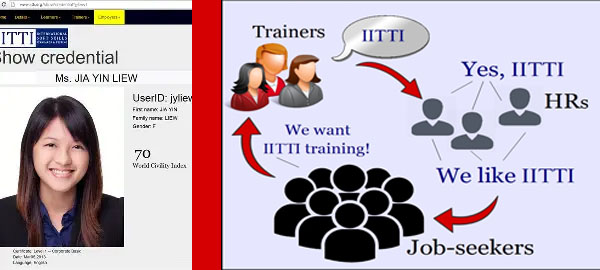
The IITTI system provides a standardized way for employers, job seekers, and trainers to measure soft skills. With a global standard, HR departments can easily pre-screen job candidates before any interview. For job seekers, having an internationally recognized certification helps them stand out from other candidates. For trainers, taking an independent test instead of a home-based one eliminates conflicts of interest.
How to Join It?
Step 1
Someone in IITTI invite you to attend one lecture, you can return to GPLT or IITTI person of responsibility
Step 2
After the zoom meeting end, you will earn point immediately, to get it and exchange it from restaurant or hotel or other from the 19 countries and you will see a link
Step 3
You must open the link, then install the app from Android or IOS based on your phone brand
Step 4
You must make subscribe on the app, and now you begin a long – term learning for years to come.
IITTI on Facebook
mailto:https://www.facebook.com/IITTIorg/
IITTI on LinkedIn
www.linkedin.com/company/iitti/posts/?feedView=all
In the end, tell us in the comment section did you get the app easily? and are you tried to attend lecture or read book. etc. and how your experience was?
Thanks for reading.