


The Capital
Tokyo
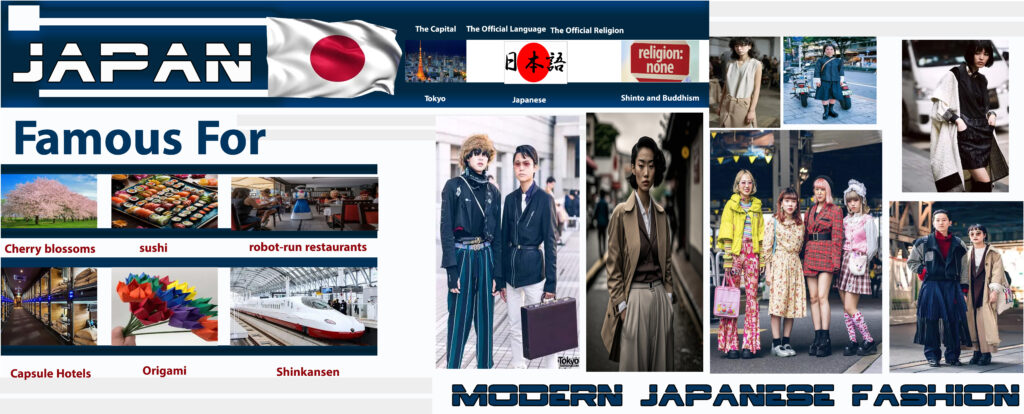
The capital of Japan is Tokyo, throughout history, the national capital of Japan has been in locations other than Tokyo. as the biggest metropolis in Japan, Tokyo is famous for the latest Japanese fashion trends in Ginza and Harajuku, iconic monuments like Hachiko and Gundam statues, skyscrapers like Tokyo Skytree, and futuristic tech havens like Odaiba and Akihabara.
It’s Located
Japan is an island nation located in East Asia, lying in the Pacific Ocean. It is bordered to the west by the Sea of Japan and faces the Pacific Ocean to the east. The country consists of four main islands: Honshu, Hokkaido, Kyushu, and Shikoku, along with thousands of smaller islands. Japan’s geographical coordinates range from 24° 30′ N to 45° 30′ N latitude and 122° 55′ E to 153° 59′ E longitude. This wide span places Japan in a temperate zone, with varying climates from the subarctic conditions of the northern island of Hokkaido to the subtropical climate of Okinawa in the south. The capital city, Tokyo, is situated at 35° 41′ N latitude and 139° 46′ E longitude.
It’s Official language
Japanese (Nihongo)
The official language of Japan is Japanese (Nihongo), spoken by approximately 99.2% of the population. It is the national language used in education, government, and media. Japanese is the only official working language in Japan and is considered the standard form of the language.
It’s Official Religion
Japan does not have an official religion
Japan does not have an official religion, as the Japanese Constitution guarantees the right of religious freedom. However, Shinto and Buddhism are the two most widely practiced religions in Japan, with many Japanese people identifying as both. The Japanese government does not officially endorse any religion, but it provides financial support to some religious organizations, including Shinto shrines and Buddhist temples, as part of its efforts to preserve Japan’s cultural heritage.
The Clothing
in the 80s, in the 90s
‘Whether it was the Japanese neon city pop fashion styleor the bold style choices with the rise of gyaru fashion “soft” was not a word to describe modern Japanese fashion. when retro games like the original Donkey Kong and Super Mario Brothers emerged in the 1980s with their bright colours and wild designs, Japan developed a penchant for vibrant aesthetics. It was a time of creativity as music and anime introduced new ideas, inspiring the youth. In the 1980s, Japan embraced bright colours and wild designs evident in the games they produced (like Donkey Kong or Super Mario), in their music, and anime. It was an era of creativity, with pop culture products igniting fresh inspiration among the youth. This was reflected in fashion, as people began donning loud clothing to express their unique selves.
Typically, modern Japanese fashion embraces linen clothing in earthy colours, often featuring simple patterns like stripes or polka dots. These garments are favoured for work attire, offering a clean, subdued, and professional look without compromising on style.
Japan adores muted colours
Unlike the past when bright colours dominated, the youth have embraced a palette that’s much gentler on the eyes. With a soft and relaxed aesthetic, it exudes a more mature image. Pastel tones, especially popular in spring, complement the blooming flowers beautifully. Japanese fashionistas also have a penchant for styling outfits monochromatically. An all-white or all-black ensemble lends an individual a clean and put-together appearance. Though such outfits may comprise numerous pieces, they are unified in shades of black and white, creating a harmonious look. Layering these different shades adds dimension to the outfit, providing another focal point to catch the eye.
and their clothes come in looser and boxier fits that flatter Asian bodies
Do & Don’ts in Japan
First: Don’t
Don’t walk around eating or smoking
Eating while walking around between attractions may seem like you’re killing two birds with one stone, however this is considered rude in Japan. Accidentally spilling your coffee or dropping that piece of sushi on the ground may lead to someone treading in it and ruining their day.
Don’t misuse your chopsticks
Chopsticks have quite a few symbolic meanings that should be observed in Japan. If you have an Asian heritage you may already be familiar with some.
Don’t stick your chopsticks upright in your rice bowl. This is a taboo in Japan as this ritual is reserved for funeral services. It is disrespectful to do this otherwise as it can be reminder of death or bad luck. It’s also impolite to cross them.
Don’t pass food to another person with chopsticks that have touched your mouth.
This isn’t very hygienic but if you’d like your travel buddy to sample what you’re eating, use the other end of the chopsticks to place a piece on a small plate and pass it over.
Don’t rub your chopsticks together. The single-use wooden chopsticks you receive that need to be broken apart before use are only seen to have splinters if they are of cheap quality. Rubbing them together implies to the establishment you believe their chopsticks aren’t up to scratch.
Don’t stab pieces of food with your chopsticks. This is bad manners in Japan and not how chopsticks are intended to be used.
Do place your chopsticks back on the hashioki 箸置き (chopstick rest) when not in use. This will ensure they stay clean and don’t roll off the table.
Second Do
Do try the amazing food at convenience stores
Prepare to break all your pre-conceived stereotypes that convenience store food is stale, tasteless rubbish. Your mind will be blown away by the high quality (and variety) of food and snacks available in konbini stores like Family Mart, 7-11 and Lawson in Japan – it’s all super fresh as well! Refrigerated goodies include sushi, onigiri, iced coffees and frappes. Delicious baked goods, desserts and even alcoholic beverages are available. thus, You can always ask staff to warm up meals in their microwave!
Keep Your Trash
Trash bins are often hard to find on the streets of Japan, yet everywhere is surprisingly litter-free. This is because people in Japan value cleanliness and keep their trash. Trash bins can be found in supermarkets (more on this later), next to vending machines, and in public restrooms. It’s advisable to carry your trash until you find a bin, or take it back to your hotel and dispose of it there. Resist the temptation to litter even if there aren’t any bins and do as the locals do.
Don’t be afraid of the toilets
What not to do in Japan? Don’t knock it ’til you’ve tried it! Get excited to experiment with the interesting buttons on Japanese toilets. Over 80% of households in Japan have toilets with a bidet option and you can even adjust the water’s temperature and pressure. Fancy listening to some relaxing rainforest sounds or pleasant music while nature calls? The reason there are music options on Japanese toilets in public is because Japanese women are usually shy, and don’t want their bodily functions to be heard by others.
Famous For
Cherry blossoms
Cherry blossom viewing is popular in Japan for good reason, every spring, the cherry blossom season in Japan attracts visitors for its sakura flowers, whose fleeting beauty is a symbol of the seasons changing. Definitely one of my favorite Japanese things, sitting beneath the cherry blossoms for a picnic is a leisurely pastime and an age-old tradition for Japanese people. Often, you will see crowds gathering in places where the flowers bloom aplenty, such as Ueno Park, Meguro River, and Shinjuku Gyoen in Tokyo.
Japanese cuisine
Japanese ramen, from top-notch ramen eateries to sushi conveyor belts to robot-run restaurants, Japan has many creative ways of serving your dinner. Foodies like me won’t regret taking part in this food tour of Tokyo. It comes with seven to nine food stops, a chance to taste regional food, and get a crash course in Japanese cuisine.
koi fish
Also popular in Japan is its national fish of Japan, this colorful carp called koi is famous for its ornamental beauty. Incredibly pleasing to the eyes, Japanese koi can be seen swimming in the ponds of zen gardens and temples in Japan. They can grow up to three feet long, appearing in combinations of red, white, orange, and yellow. As they’re valued for aesthetic reasons and good luck, this isn’t a fish you’re likely to find served on a sushi platter.
Green tea
Japan is known for its tea-loving and drinking culture, especially when it comes to green tea or matcha. Rich in antioxidants, green tea is the most popular type of tea in Japan. during tea ceremonies, powdered green tea is traditionally prepared inside a tea room with tatami floors. If you’re eager to know more about the Japanese tea ceremony, this matcha and kimono workshop in Shinjuku should be on your to-do list.
Shinkansen
The Shinkansen, also known as the bullet train, takes Japan’s famously efficient railway system to a new level. These high-speed trains can reach up to 320 km/h and are the best way to explore the country. In total, there are ten Shinkansen lines in the country, running through most of Japan’s major cities. You’re most likely to ride the Tokaido Shinkansen from Tokyo to Osaka, but the lines stretch all the way from Hakodate in Hokkaido to Kagoshima in the far south of Kyushu.
Onsen
As a byproduct of its location on the Ring of Fire, Japan is full of geothermal hot spring baths, or onsen. There are many onsen towns in Japan where you can take a dip in these relaxing hot springs yourself. Many of these onsen have water filled with minerals, which are believed to have a range of health benefits and, in some cases, healing powers. There are both indoor and outdoor onsen, and men’s and women’s baths are often separated since you usually have to enter an onsen naked. However, a small onsen towel will help you to preserve a little modesty and dry off after you get out of the baths.
Capsule Hotels
If you’re looking for unique hotels in Tokyo, you can’t go wrong with a capsule hotel. Offering a solution to the limited space in Japan’s big cities, these sci-fi-like sleeping pods are an affordable alternative to an expensive hotel room. The pods come with a bed, a light and sometimes a TV. There are communal bathrooms and lounge areas, similar to a hostel. Capsules in these hotels are often separated by gender and usually come with a single bed, but there are some available for couples too. Either way, it’s a unique experience to have when staying in Japan.
Origami
The special paper-folding technique known as origami originated in Japan. From a single sheet of paper, people are able to create stunning sculptures – all without cutting or ripping the paper. The word origami literally means “folding paper”. It started off as a ceremonial Shinto ritual, but it turned into a more leisurely activity in the Edo Period. Origami experts are only limited by their imagination, but the most famous origami shape is the paper crane. There’s a popular saying that if you fold one thousand paper cranes, your wish will come true.
Biodiversity & Climate
Japan’s biodiversity is a result of its unique geographical and geological features, as well as its status as an island nation. The country is home to over 70,000 species of plants and 50,000 species of animals, with a high percentage of endemic species. This biodiversity is crucial for sustaining ecosystems and ensuring human well-being. Japan’s conservation efforts include establishing numerous national parks and protected areas, which cover approximately 20% of its land area. However, challenges such as habitat destruction, urbanization, and climate change threaten this rich biodiversity. Japan’s governance of protected areas has shifted towards polycentric regimes, involving co-management and collaborative governance to address the shortcomings of centralized governance. Despite these efforts, Japan faces ongoing controversies such as whaling and ivory trading that compromise conservation efforts.
National Parks and Protected Areas in Japan
Japan’s national parks and protected areas testify to the country’s commitment to preserving its natural beauty and biodiversity. These protected spaces, ranging from volcanic peaks to coastal gems, offer a unique blend of stunning landscapes and cultural heritage. Managed by the Ministry of the Environment, these parks are designed to protect scenic natural sites for the enjoyment of the public. They encompass a wide range of environments, including volcanoes, forests, swamps, beaches, coastlines, and underwater marine habitats. Visitors can enjoy a variety of outdoor activities such as hiking, boating, fishing, snorkeling, diving, and hot springs. Some parks also offer ecotourism activities such as whale and dolphin watching and guided nature walks. Japan’s national parks stand out from others around the world for their unique combination of cultural heritage and natural scenery, celebrating centuries of human connection with nature.
The Security Situation in Japan
Japan faces a range of external security challenges, including
Nuclear Threats
North Korea’s nuclear weapons and ballistic missile programs pose a significant threat to Japan’s security. North Korea has conducted multiple nuclear tests and is capable of developing nuclear warheads that can be delivered by ballistic missiles.
Chinese Military Expansion
China’s advancing military capabilities and activities at sea and in the air are a cause for concern. Japan has committed to the defense of South Korea and is now also committed to the defense of Taiwan.
Cybersecurity
Cyberattacks across borders and the spread of disinformation are becoming more frequent and sophisticated. These threats blur the lines between emergency and peacetime.
Regional Security
Japan’s security is increasingly intertwined with that of the Euro-Atlantic and Indo-Pacific regions. The security of these two regions is inseparable, and Japan is emerging as a key security actor.
International Terrorism
The proliferation of weapons of mass destruction and the rise of international terrorism are also transnational threats.
Japan’s security strategy aims to address these challenges by strengthening its defense capabilities, deepening its international partnerships, and maintaining a free and open international order.
Japan’s security strategy includes
Strengthening its defense capabilities
Maintaining peace through cooperation with its allies and the international community
Addressing economic security and cyber threats
Japan is also concerned about the possibility of invasions
and the need to maintain its peace and security based on freedom and democracy